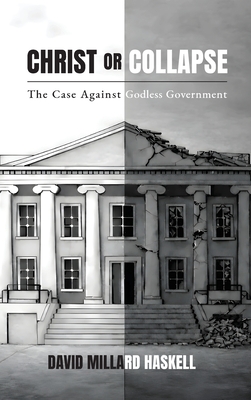
This book examines the relationship between Christian moral principles and political
governance in Western nations, with particular emphasis on the United States and
Canada. Drawing on historical records, theological sources, and social scientific
research, the author presents a political framework described as "Traditional
Conservatism," defined as the application of Christian norms to public law and civic life.
The work critiques competing political ideologies, including progressivism, classical
liberalism, and libertarianism, and traces their historical development and social effects.
It includes analysis of legal traditions, national identity, immigration, and cultural
cohesion, along with theological discussions concerning the relationship between
church and state. Historical examples from Western societies are used to illustrate the
role of Christian-informed systems of governance. The concluding chapters present
practical guidance for political participation and civic organization aimed at influencing
public policy.
 Cart Contents