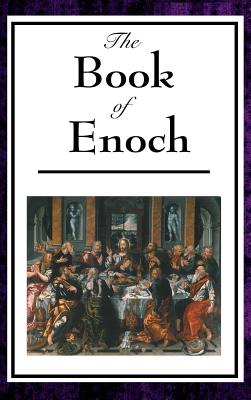
An ancient apocalyptic text attributed to Enoch, presenting visions of judgement, cosmology, and the ordering of the heavens.
The Book of Enoch is a composite work of early Jewish religious literature, traditionally ascribed to Enoch, the great-grandfather of Noah. Preserved in Ethiopic manuscripts and long excluded from the canonical Hebrew Bible, the text offers a series of visionary accounts describing the fall of the Watchers, the structure of the cosmos, and the ultimate judgement of the righteous and the wicked. Its imagery and themes exerted a discernible influence on later apocalyptic traditions, including elements reflected in early Christian writings.
This edition follows the nineteenth-century English translation by Richard Laurence, Archbishop of Cashel, whose work introduced the text to a wider European readership following the recovery of Ethiopic manuscripts. Laurence's translation remains historically significant as one of the earliest sustained efforts to render the text accessible in English, preserving the tone and structure of the source material while reflecting the scholarly conventions of its time.
The work occupies an important position in the study of Second Temple Judaism, apocalyptic literature, and the development of religious cosmology. It continues to be read for its theological implications, literary qualities, and its role in shaping later religious imagination.
 Cart Contents